



- info@prototypeshlh.com
- +86-133-9285-9203
- Room 2003, 20th Floor, Xingji Building, Shangde Road, Shajing Street, Bao'an District, Shenzhen
SERVICES

CNC Machining Service
Tight tolerances and finishing capabilities, as fast as 2 days.

Vacuum Casting Service
Production quality parts without the tooling investment.

Sheet Metal Fabrication
Experience the versatility 6 cost efficiency withflexible application options.

Die Casting Service
Create high quality custom mechanicals withprecision and accuracy.

Injection Molding Service
Production-grade steel tooling, as fast as weeks.

Carbon Fiber Manufacturing
Composite materials, such as carbon fiber reinforced plastics are highly versatile and efficient materials.
Popular Services

Injection Molding Service
A faster, easier way to order high-quality injection molded parts that accelerates iteration, testing, and scaled production. Upload your designs for DFM feedback and pricing in 24 hours.

3D Printing Service
Our 3D printing solutions cater to personalised needs with a diverse range of materials and colour options, including SLA, SLS, FDM, Projet, DMLS, and MJF printing services.

Surface Finishing
The easiest way to source your custom parts, with 15+ surface finishing options.

Design Guide
In-depth design guides full of best practices for all of HLH's manufacturing processes.

Case Studies
Success stories from innovativecompanies using HLH.

Blog
lndustry trends, company news andproduct updates.
Featured Posts
3D Printing vs. CNC Machining: Which is Better for Prototyping?
View more →
The Advantages of Projection 3D Printing for Mass Production
View more →
How to Choose Between Aluminum Alloy Casting and CNC Machining
View more →
What is Vacuum Injection Molding? What Type Suitable for Production?
View more →

About Us
Learn about our company, leadership, and mission totransform manufacturing.

Privacy Policy
Applies to all personal information collected through and/or processed in connection.

Contact Us
Our team is on stand by, waiting to assist you.

Videos
A large collection of educational videos and tutorials.

Aerospace & UAV
HLH is your 3D manufacturing partner from prototype to large scale production.

Consumer Products
New Product Introduction Solutions for Consumer Products.

Automotive
New Product Introduction Solutions for Automotive.

Industrial Machinery
The main purpose of industrial prototyping is to take the product from drawings into the real world.

Robotics & Automation
Need some assistance bringing your robotic device or parts from the sketch-board to reality?

Medical Devices
The medical industry needs high quality, dependable and safe parts and products.

Communications
We understand the demands and ever changing landscape of the communications industry.

Product Development
Industrial design and engineering consultancies are some of the most innovate and creative enterprises on the planet.

When developing a prototype or custom part, choosing between 3D printing and CNC machining depends on factors such as material, strength, dimensional accuracy, surface finish, geometry, production volume, and budget.
In general, 3D printing is often better for fast prototypes, complex geometries, and low-volume plastic parts, while CNC machining is usually better when you need high dimensional accuracy, stronger functional parts, engineering-grade materials, or production-quality components.
Neither process is universally better. The right choice depends on what the part needs to do.
| Factor | 3D Printing | CNC Machining |
|---|---|---|
| Manufacturing method | Additive manufacturing | Subtractive manufacturing |
| Typical materials | Plastics, resins, some metals | Metals, plastics, composites |
| Prototype speed | Very fast | Fast |
| Geometric complexity | Excellent | Good, but tool access matters |
| Dimensional accuracy | Good to very good, depending on technology | Very good to excellent |
| Mechanical strength | Depends strongly on material and print orientation | Generally high and more consistent |
| Surface finish | Depends on printing technology | Generally smoother |
| Material properties | Can be anisotropic | Generally more consistent |
| Material waste | Low | Higher due to material removal |
| Production volume | Best for prototypes and low volume | Prototypes through production |
| Functional metal parts | Limited depending on printing technology | Excellent |
| Tooling required | No | No |
| Best for | Rapid prototypes and complex shapes | Functional and precision parts |
The fundamental difference is how the part is manufactured.
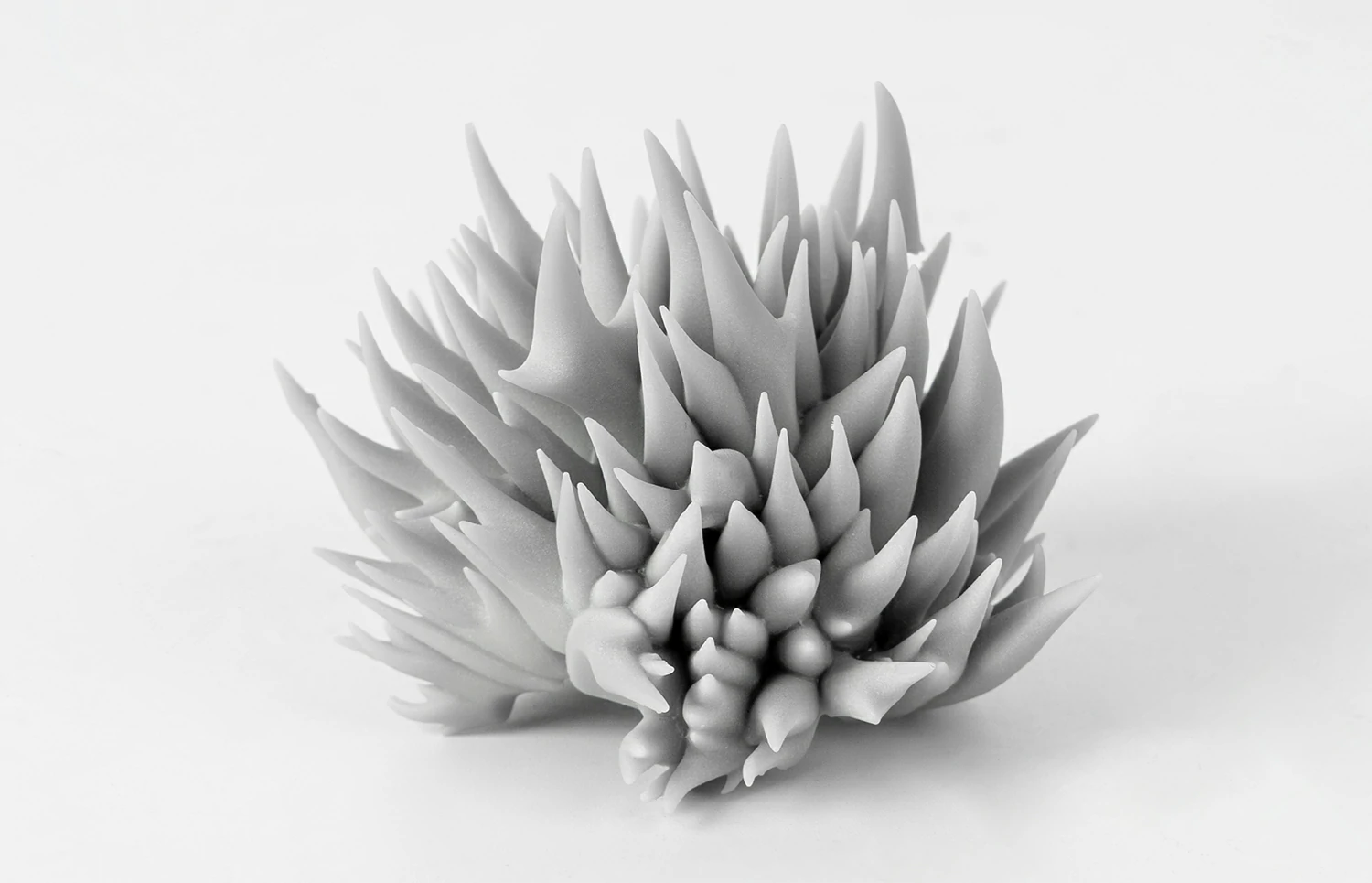
3D printing is an additive manufacturing process. Material is built up layer by layer according to a digital 3D model. Different technologies, such as SLA, SLS, FDM, and metal 3D printing, use different materials and manufacturing principles.
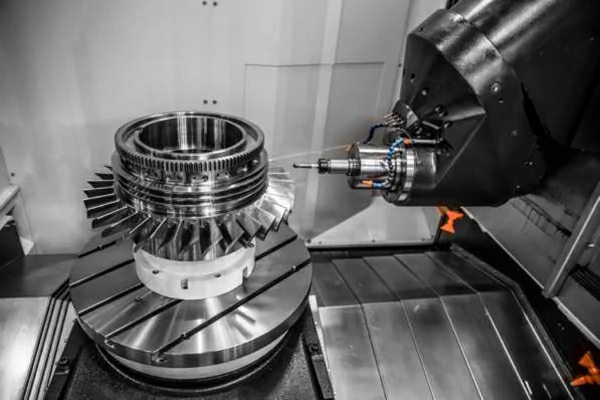
CNC machining is a subtractive manufacturing process. A CNC machine starts with a block, bar, or other piece of material and removes material using cutting tools until the desired geometry is produced.
This fundamental difference affects material selection, geometry, accuracy, surface finish, strength, and production economics.
3D printing is often a good choice when speed, design flexibility, and complex geometry are more important than maximum mechanical performance.
3D printing can produce prototypes directly from a digital CAD model without machining fixtures or molds.
This makes it useful during early product development when designs may change frequently.
For example, product designers can print several design iterations, evaluate the fit and appearance, and then modify the CAD model before moving to another manufacturing process.
3D printing can create geometries that are difficult or expensive to machine.
Examples include:
However, the actual capability depends on the specific 3D printing technology and design.
3. You only need a small number of parts
For one-off prototypes or small quantities, 3D printing can eliminate the need for dedicated tooling.
This can make it economical for early-stage product development.
If the primary purpose is to evaluate:
3D printing can be an efficient solution.
CNC machining is generally more suitable when precision, mechanical performance, material selection, and production-quality parts are important.
CNC machining can achieve tight tolerances when the machine, tooling, material, part geometry, and inspection process are properly controlled.
This makes CNC suitable for components that need to interface with other precision parts.
Examples include:
The achievable tolerance should always be specified according to the actual part requirements rather than assuming that every CNC process automatically provides the same tolerance.
CNC machining has a major advantage when the finished component needs to be manufactured from engineering metals such as:
For functional metal prototypes and production components, CNC machining can provide predictable mechanical properties and high-quality surfaces.
CNC-machined surfaces can be relatively smooth directly after machining and can also receive additional finishing processes.
Depending on the application, options may include:
The appropriate finish depends on the material and functional requirements.
A prototype is not always just a visual model.
If you need to test:
CNC machining may be more appropriate when the final product is also expected to use a machined metal or plastic material.
CNC machining is generally the better choice when very tight dimensional tolerances are required.
However, accuracy is not determined by the manufacturing process alone.
For 3D printing, accuracy can depend on:
For CNC machining, accuracy can depend on:
Therefore, it is more scientifically accurate to compare the specific process and machine capability rather than saying that all CNC parts or all 3D-printed parts have a particular tolerance.
CNC-machined parts generally have more consistent and predictable mechanical properties, especially when machining conventional engineering materials.
One reason is that many 3D-printed parts are built layer by layer. Depending on the technology and material, the resulting part can have different properties along different directions.
CNC machining, on the other hand, retains the bulk material's inherent properties more directly.
However, this does not mean that every CNC part is stronger than every 3D-printed part.
Advanced additive manufacturing technologies can produce high-performance parts, including metal components, for demanding applications.
The correct comparison should therefore consider:
material + manufacturing technology + part orientation + geometry + required load + operating environment.
There is no universal answer.
For one or a few complex plastic prototypes, 3D printing can often be more economical because there is little setup and no need to remove large amounts of material.
For precision parts, metal components, or larger production quantities, CNC machining may provide better overall value despite a higher manufacturing cost per part in some cases.
Cost is affected by:
Therefore, comparing only the quoted price without considering the required performance can lead to the wrong manufacturing decision.
Yes. In product development, 3D printing and CNC machining are often complementary rather than competing processes.
A common workflow is:
3D Printing → Design Validation → CNC Prototype → Functional Testing → Production
For example:
This approach can reduce unnecessary machining during the early design stage while still allowing engineers to validate the final material and mechanical performance.
A simple decision rule is:
You are developing a product where speed, design validation, and functional testing are all important.
Using 3D printing for early iterations and CNC machining for later functional prototypes can be an efficient product-development strategy.
The choice between 3D printing and CNC machining should be based on the actual requirements of the part rather than simply choosing the newer or cheaper technology.
3D printing is generally advantageous for rapid prototyping, complex geometries, and low-volume parts. CNC machining is generally advantageous for precision components, functional prototypes, engineering materials, and production-quality parts.
If you are unsure which process is appropriate, evaluate these six factors first:
Material → Geometry → Tolerance → Mechanical requirements → Quantity → Surface finish
Once these requirements are defined, the appropriate manufacturing process becomes much easier to determine.
For projects that require multiple manufacturing technologies, HLH Prototypes provides both CNC machining and 3D printing services, allowing engineers and product-development teams to select the process according to the requirements of each component.
Not necessarily. CNC machining and 3D printing are designed for different manufacturing requirements. CNC is generally better for precision and functional parts, while 3D printing is often better for rapid prototyping and complex geometries.
For small quantities and certain complex prototypes, 3D printing can be less expensive. CNC may be more economical for certain materials, geometries, and production quantities. The actual cost depends on the part requirements.
CNC-machined parts generally provide more consistent mechanical properties when produced from conventional engineering materials. However, strength depends on the material and manufacturing technology, so there is no universal answer.
3D printing can replace CNC machining for some prototypes and low-volume applications, but it does not replace CNC for every application. Precision, material, tolerance, surface finish, and mechanical requirements must be considered.
For rapid design iterations and visual or fit-check prototypes, 3D printing is often efficient. For functional prototypes that need production-grade materials, tight tolerances, or high mechanical performance, CNC machining may be more appropriate.
SERVICES