


- info@prototypeshlh.com
- +86-133-9285-9203
- Room 2003, 20th Floor, Xingji Building, Shangde Road, Shajing Street, Bao'an District, Shenzhen
SERVICES

CNC Machining Service
Tight tolerances and finishing capabilities, as fast as 2 days.

Vacuum Casting Service
Production quality parts without the tooling investment.

Sheet Metal Fabrication
Experience the versatility 6 cost efficiency withflexible application options.

Die Casting Service
Create high quality custom mechanicals withprecision and accuracy.

Injection Molding Service
Production-grade steel tooling, as fast as weeks.

Carbon Fiber Manufacturing
Composite materials, such as carbon fiber reinforced plastics are highly versatile and efficient materials.
Popular Services

Injection Molding Service
A faster, easier way to order high-quality injection molded parts that accelerates iteration, testing, and scaled production. Upload your designs for DFM feedback and pricing in 24 hours.

3D Printing Service
Our 3D printing solutions cater to personalised needs with a diverse range of materials and colour options, including SLA, SLS, FDM, Projet, DMLS, and MJF printing services.

Surface Finishing
The easiest way to source your custom parts, with 15+ surface finishing options.

Design Guide
In-depth design guides full of best practices for all of HLH's manufacturing processes.

Case Studies
Success stories from innovativecompanies using HLH.

Blog
lndustry trends, company news andproduct updates.
Featured Posts
3D Printing vs. CNC Machining: Which is Better for Prototyping?
View more →
The Advantages of Projection 3D Printing for Mass Production
View more →
How to Choose Between Aluminum Alloy Casting and CNC Machining
View more →
What is Vacuum Injection Molding? What Type Suitable for Production?
View more →

About Us
Learn about our company, leadership, and mission totransform manufacturing.

Privacy Policy
Applies to all personal information collected through and/or processed in connection.

Contact Us
Our team is on stand by, waiting to assist you.

Videos
A large collection of educational videos and tutorials.

Aerospace & UAV
HLH is your 3D manufacturing partner from prototype to large scale production.

Consumer Products
New Product Introduction Solutions for Consumer Products.

Automotive
New Product Introduction Solutions for Automotive.

Industrial Machinery
The main purpose of industrial prototyping is to take the product from drawings into the real world.

Robotics & Automation
Need some assistance bringing your robotic device or parts from the sketch-board to reality?

Medical Devices
The medical industry needs high quality, dependable and safe parts and products.

Communications
We understand the demands and ever changing landscape of the communications industry.

Product Development
Industrial design and engineering consultancies are some of the most innovate and creative enterprises on the planet.

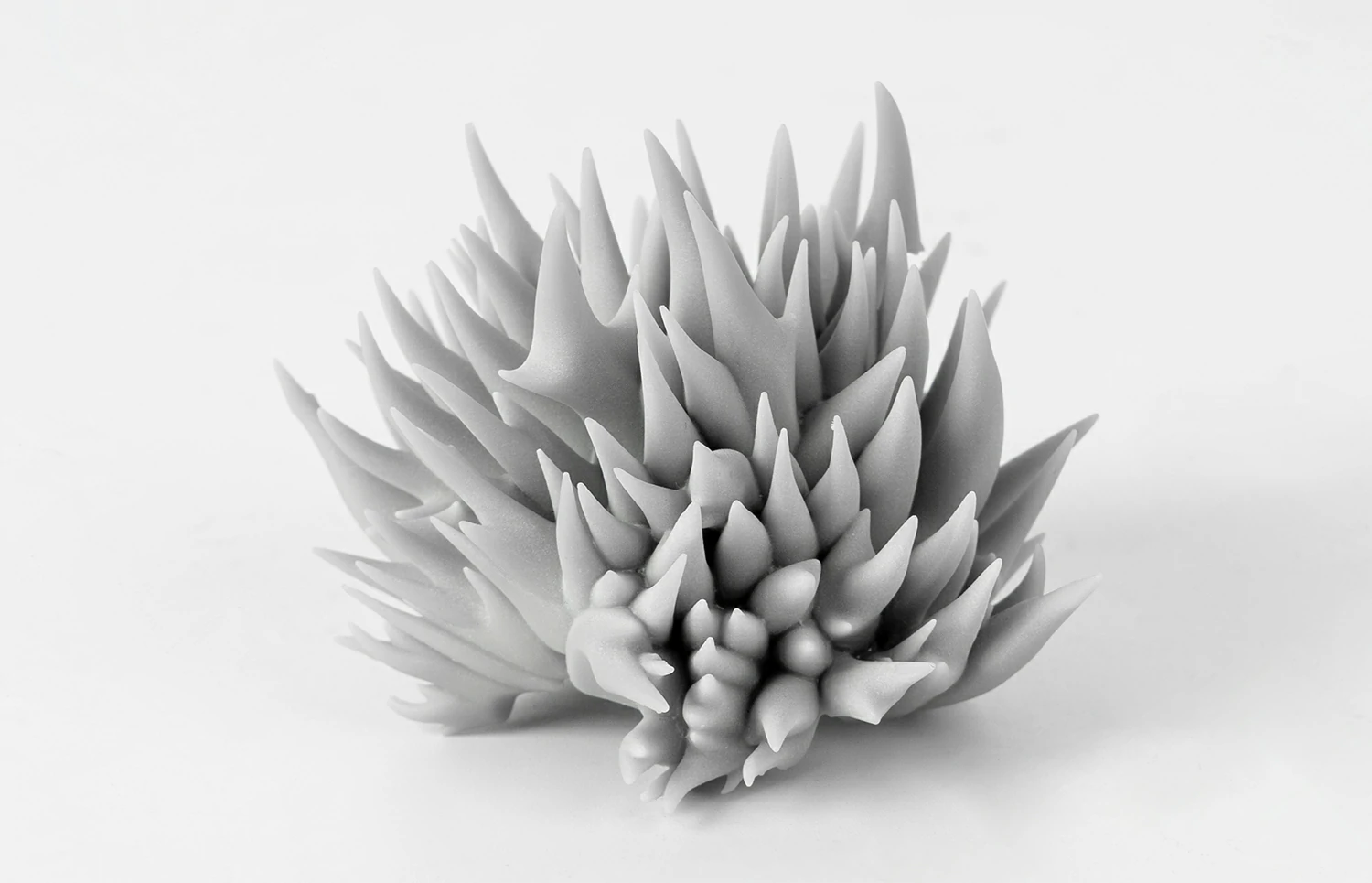
3D printing, also known as additive manufacturing, builds parts layer by layer directly from a digital 3D model. Unlike subtractive processes such as CNC machining, 3D printing adds material only where it is needed.
The main advantages of 3D printing are fast prototyping, design flexibility, low tooling requirements, efficient production of complex geometries, and economical production of small quantities. These advantages make 3D printing particularly useful during product development and for certain low-volume manufacturing applications.
However, 3D printing is not the best solution for every part. Material requirements, dimensional tolerances, surface finish, mechanical performance, production volume, and the selected printing technology should all be considered before choosing the process.
The key advantages of 3D printing include:
The importance of each advantage depends on the specific application and 3D printing technology.
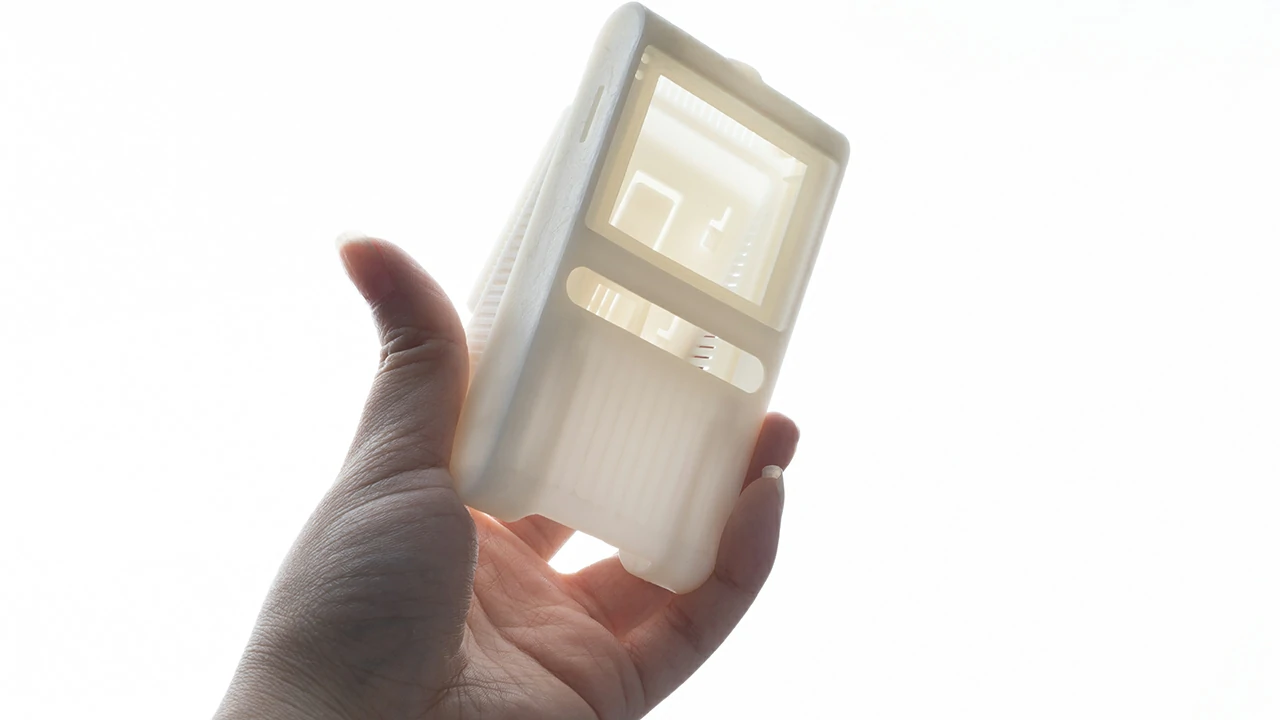
One of the most important advantages of 3D printing is its ability to produce prototypes directly from a digital CAD model.
Traditional manufacturing processes may require tooling, fixtures, or more extensive setup before production begins. Many 3D printing processes can start production with relatively little setup.
This allows product development teams to move quickly from:
CAD Design → 3D Printed Prototype → Testing → Design Modification → New Prototype
Designers can therefore evaluate several versions of a product without committing to expensive production tooling.
For early-stage product development, this can significantly shorten the iteration cycle.
3D printing can produce geometries that may be difficult, expensive, or impractical to manufacture using conventional processes.
Depending on the printing technology, examples can include:
This design freedom allows engineers to focus more on functional requirements rather than designing every feature around traditional manufacturing limitations.
However, design freedom does not mean that every geometry can be printed without limitations. Overhangs, support structures, wall thickness, shrinkage, warping, build orientation, and post-processing requirements still need to be considered.
Most 3D printing applications do not require molds or dedicated production tooling.
This is particularly useful when producing prototypes or small quantities because the manufacturer can work directly from the digital model.
For example, injection molding typically requires a mold before production can begin. A 3D printing process can often produce the first parts without creating a dedicated mold.
This makes 3D printing attractive when:
For high-volume production, however, other manufacturing methods may become more economical depending on the part.
3D printing can be particularly useful when only a small number of parts are needed.
Because there is usually no dedicated mold or tooling investment, the initial cost structure can be more favorable for prototypes and low-volume production.
This is useful for applications such as:
The economics depend heavily on part size, material, printing technology, machine time, post-processing, and quantity.
As production volume increases, processes such as injection molding or CNC machining may become more competitive for certain applications.
Product development rarely follows a single design cycle.
Engineers may discover problems involving:
With 3D printing, the digital model can be modified and another prototype can be produced without manufacturing a new mold.
This makes additive manufacturing particularly valuable during iterative product development.
For example:
Version A → Test → Modify CAD → Version B → Test → Version C
Each iteration can provide additional information before the design moves to final production.
3D printing can produce certain complex parts without requiring multiple machining operations.
A component that would traditionally require several manufacturing steps may sometimes be manufactured as one printed component.
This can potentially reduce:
One example is component consolidation, where multiple components are redesigned into a single printed part.
However, the feasibility of component consolidation depends on the application, material properties, tolerances, and post-processing requirements.
Because 3D printing is an additive process, material is deposited to create the part rather than removing material from a larger block.
As a result, some 3D printing processes can use material more efficiently than subtractive manufacturing for suitable geometries.
This can be particularly relevant for complex or lightweight designs.
However, it is not accurate to assume that every 3D printing process produces minimal waste. Support structures, failed prints, unused powder, post-processing, and other manufacturing factors can affect overall material efficiency.
The environmental impact should therefore be evaluated based on the complete manufacturing process rather than the printing method alone.
3D printing is not a single manufacturing process.
Different technologies are designed for different requirements.
Common technologies include:
Fused Deposition Modeling is widely used for affordable prototypes and functional plastic parts.
Stereolithography uses photopolymer resin and can provide fine detail and smooth surfaces, making it useful for visual prototypes and detailed components.
Selective Laser Sintering can produce polymer parts without conventional support structures and is suitable for complex geometries and functional prototypes.
Direct metal laser sintering (DMLS) is a metal 3D printing technology can produce metal components for applications where conventional plastic printing is insufficient.
The appropriate technology should be selected based on the required material properties, dimensional accuracy, surface finish, geometry, and application.
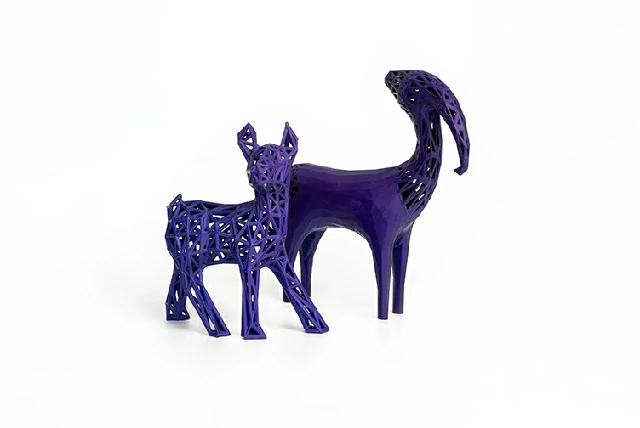
Another important advantage of 3D printing is the ability to produce customized parts without creating a new mold for every variation.
This is useful for:
A manufacturer can modify the digital model and produce a different version without fundamentally changing the manufacturing process.
This makes 3D printing particularly useful when every part does not need to be identical.
3D printing can support lightweight design strategies that may be difficult to implement using conventional manufacturing methods.
Engineers can use:
These approaches can reduce part weight while maintaining the required functional characteristics.
However, lightweight design should always be validated through appropriate engineering analysis and physical testing. A lighter part is not automatically a better part.
3D printing is particularly valuable during the prototype stage because product teams often need to balance speed, design flexibility, cost, and iteration.
For example, a development team can:
This process can be repeated before investing in production tooling or other manufacturing processes.
For this reason, 3D printing is commonly used for rapid prototyping and design validation.
Not necessarily.
3D printing has specific advantages, but conventional manufacturing processes remain important for many applications.
For example:
3D printing may be preferable when:
CNC machining may be preferable when:
Injection molding may be preferable when:
Therefore, the best manufacturing process depends on the actual requirements of the component.
Understanding the advantages of 3D printing also requires understanding its limitations.
Depending on the technology, 3D printing may have limitations related to:
For example, a 3D-printed prototype may be excellent for checking form and fit but unsuitable for a final production component that requires very tight tolerances or a specific metal alloy.
This is why manufacturing decisions should be based on the complete part specification rather than the advantages of one process alone.
3D printing is often a suitable choice when speed, complexity, customization, and low-volume production are important.
Consider 3D printing if you need:
For production applications, the selected printing technology and material should be evaluated against the required performance and production volume.
For product development, one of the biggest advantages is the ability to produce prototypes directly from digital designs with relatively little tooling. This supports rapid design iteration and testing.
3D printing allows designers to create physical prototypes quickly, modify the CAD model, and produce new versions without manufacturing a new mold.
It can be cheaper for certain low-volume prototypes, particularly when the geometry is complex and the material requirements are modest. CNC machining may be more suitable for precision parts or applications requiring engineering-grade materials.
Many 3D printing processes can reduce material waste compared with subtractive manufacturing because material is added rather than removed. However, support structures, failed prints, unused powder, and post-processing can affect the actual material efficiency.
Yes. 3D printing can be used for certain low- and medium-volume production applications. Whether it is appropriate depends on production volume, part requirements, material, cost, and required consistency.
No single manufacturing process is suitable for every application. 3D printing can replace CNC machining for some parts, particularly complex low-volume components, but CNC remains useful when tight tolerances, specific materials, surface finishes, or mechanical properties are required.
The advantages of 3D printing come primarily from its speed, design flexibility, low tooling requirements, and suitability for complex and customized parts.
For product development, 3D printing can help engineers move quickly from a digital concept to a physical prototype and iterate the design before committing to production.
However, 3D printing should not be considered a universal replacement for CNC machining, injection molding, or other manufacturing processes.
The right process depends on the part geometry, material, tolerance, mechanical requirements, surface finish, production quantity, and budget.
For projects that require both rapid prototyping and precision manufacturing, HLH Prototypes provides 3D printing and CNC machining services, allowing product teams to select the appropriate manufacturing process for each stage of development.
SERVICES