


- info@prototypeshlh.com
- +86-133-9285-9203
- Room 2003, 20th Floor, Xingji Building, Shangde Road, Shajing Street, Bao'an District, Shenzhen
SERVICES

CNC Machining Service
Tight tolerances and finishing capabilities, as fast as 2 days.

Vacuum Casting Service
Production quality parts without the tooling investment.

Sheet Metal Fabrication
Experience the versatility 6 cost efficiency withflexible application options.

Die Casting Service
Create high quality custom mechanicals withprecision and accuracy.

Injection Molding Service
Production-grade steel tooling, as fast as weeks.

Carbon Fiber Manufacturing
Composite materials, such as carbon fiber reinforced plastics are highly versatile and efficient materials.
Popular Services

Injection Molding Service
A faster, easier way to order high-quality injection molded parts that accelerates iteration, testing, and scaled production. Upload your designs for DFM feedback and pricing in 24 hours.

3D Printing Service
Our 3D printing solutions cater to personalised needs with a diverse range of materials and colour options, including SLA, SLS, FDM, Projet, DMLS, and MJF printing services.

Surface Finishing
The easiest way to source your custom parts, with 15+ surface finishing options.

Design Guide
In-depth design guides full of best practices for all of HLH's manufacturing processes.

Case Studies
Success stories from innovativecompanies using HLH.

Blog
lndustry trends, company news andproduct updates.
Featured Posts
3D Printing vs. CNC Machining: Which is Better for Prototyping?
View more →
The Advantages of Projection 3D Printing for Mass Production
View more →
How to Choose Between Aluminum Alloy Casting and CNC Machining
View more →
What is Vacuum Injection Molding? What Type Suitable for Production?
View more →

About Us
Learn about our company, leadership, and mission totransform manufacturing.

Privacy Policy
Applies to all personal information collected through and/or processed in connection.

Contact Us
Our team is on stand by, waiting to assist you.

Videos
A large collection of educational videos and tutorials.

Aerospace & UAV
HLH is your 3D manufacturing partner from prototype to large scale production.

Consumer Products
New Product Introduction Solutions for Consumer Products.

Automotive
New Product Introduction Solutions for Automotive.

Industrial Machinery
The main purpose of industrial prototyping is to take the product from drawings into the real world.

Robotics & Automation
Need some assistance bringing your robotic device or parts from the sketch-board to reality?

Medical Devices
The medical industry needs high quality, dependable and safe parts and products.

Communications
We understand the demands and ever changing landscape of the communications industry.

Product Development
Industrial design and engineering consultancies are some of the most innovate and creative enterprises on the planet.

A prototypes manufacturer is a manufacturing company that produces custom product prototypes for international companies, engineering teams, designers, and product developers.
China prototype manufacturers commonly provide processes such as 3D printing, CNC machining, vacuum casting, sheet metal fabrication, injection molding, die casting, and surface finishing.
For overseas customers, the right supplier should not be selected based on price alone. A reliable China prototypes manufacturer should also provide engineering support, DFM feedback, material options, quality control, clear communication, predictable lead times, and a practical path from prototype to production.
A prototypes manufacturer produces physical prototype parts based on customer-provided CAD files, drawings, specifications, or product requirements.
Depending on the supplier, services may include:
The prototype may be used for design verification, form and fit testing, functional testing, customer evaluation, engineering validation, or preparation for mass production.
A multi-process manufacturer can be particularly useful because the best manufacturing method may change as a product moves from early design to production.
It's also an agile, high-precision manufacturing facility designed specifically for on-demand, low-volume, and rapid turnaround production. Unlike traditional mass-production factories built for high-volume static runs, a dedicated prototype factory excels at:
Flexible Multi-Process Manufacturing: Offering various fabrication processes under one roof.
Fast Turnarounds: Delivering functional prototypes in as fast as 24 to 48 hours.
Design for Manufacturability (DFM) Feedback: Identifying potential design defects before full tooling investment.
Bridge Production: Seamlessly scaling parts from 1-off prototypes to tens of thousands of production units.
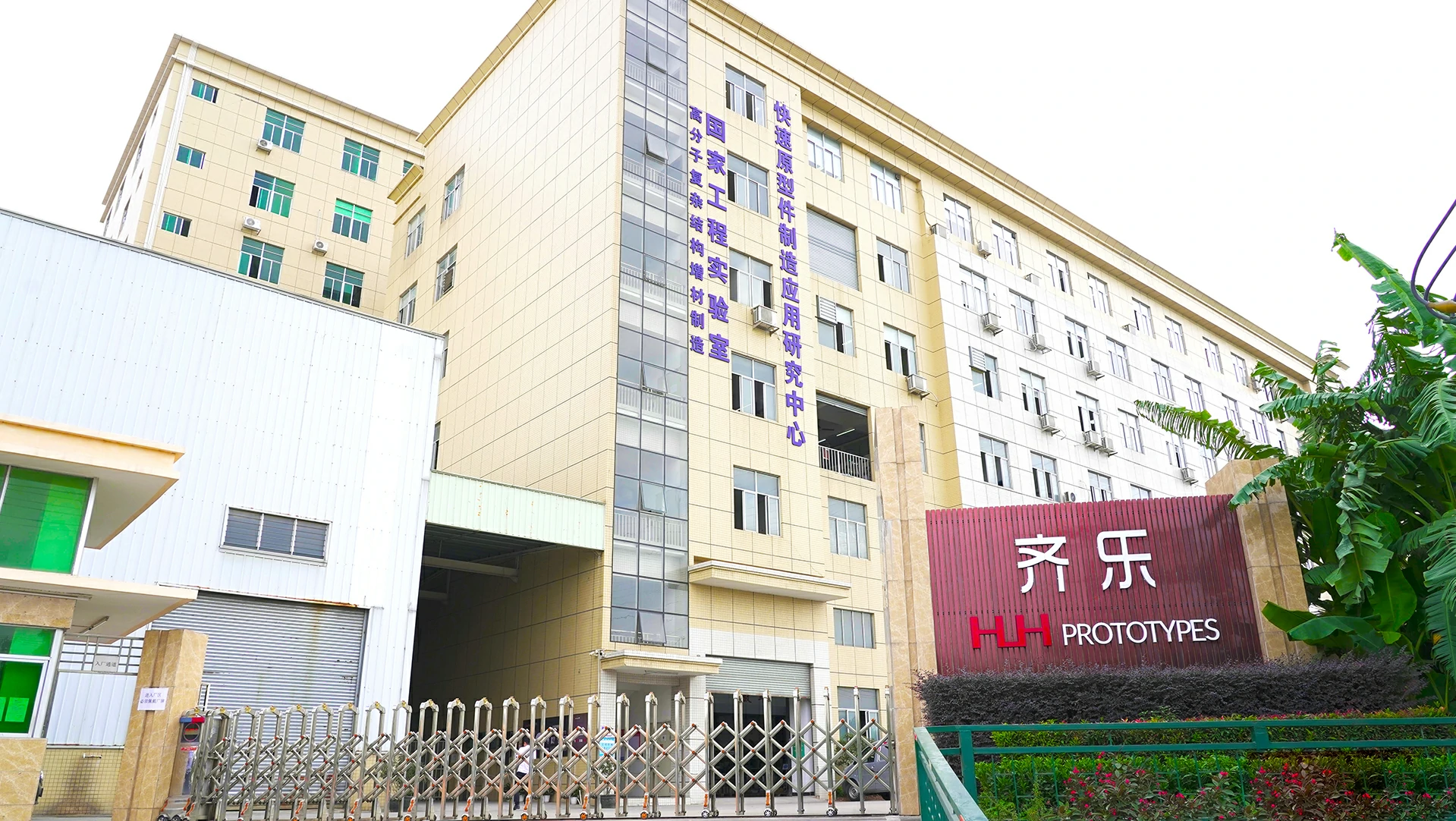
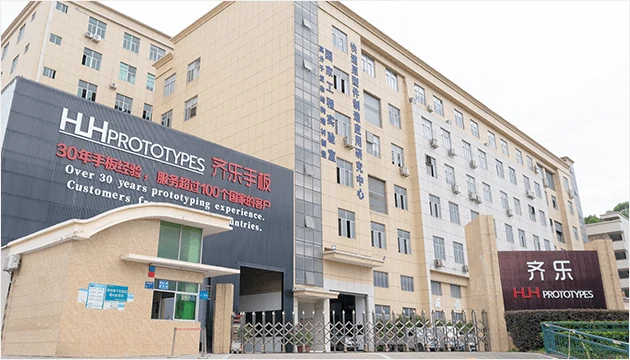
At HLH Prototypes, we operate as a full-service rapid prototyping and low-volume manufacturing factory. With decades of international manufacturing expertise, state-of-the-art equipment, and rigorous ISO-certified quality control, we help hardware designers, engineers, and startups bring complex designs to life effortlessly.
Complete Manufacturing Fleet: CNC Machining, SLA/SLS/SLM 3D Printing, Vacuum Casting, Injection Molding, Sheet Metal, Die Casting, and Custom Carbon Fiber Parts.
Fast & Transparent: In-depth DFM review, transparent pricing, and rapid delivery in days, not weeks.
Global Trust: Trusted by top medical, automotive, aerospace, and consumer electronics brands worldwide.
Ready to turn your CAD design into reality? Upload your 3D CAD files to HLH Prototypes today for a fast quote and instant DFM analysis.
Why Do Companies Work With China Prototype Manufacturers?
The main reason companies consider China for prototype manufacturing is not simply lower manufacturing cost.
A capable supplier can combine manufacturing capabilities, engineering resources, material availability, production capacity, and export experience.
China also has a large manufacturing ecosystem covering machining, molding, additive manufacturing, metal fabrication, casting, finishing, tooling, and component supply.
For an international product development team, this can make it possible to work with one supplier across several development stages.
However, the quality of China prototype manufacturers varies significantly. Buyers should evaluate the actual factory, engineering capabilities, quality system, communication process, and production experience rather than assuming that every supplier provides the same level of service.
Criteria | What to Look For |
|---|---|
Manufacturing Breadth | Single-source factory capable of CNC, 3D Printing, Injection Molding, Sheet Metal, Die Casting, and Carbon Fiber. |
Quality Management | ISO 9001 and ISO 13485 certifications, full CMM dimensional inspection, and material testing certificates. |
Engineering DFM Support | Pre-production DFM analysis to optimize wall thickness, draft angles, and tolerances. |
Turnaround Time & Shipping | Fast global shipping logistics with clear production schedule tracking. |
IP Protection | Strict Non-Disclosure Agreements (NDAs) and secure file management systems. |
Proof of Concept (1–5 Parts): Rapid 3D printing or 3-axis CNC machining to test form, fit, and aesthetic ergonomics.
Functional Testing (5–50 Parts): Precision 5-axis CNC machining, Vacuum Casting, or Metal 3D printing for structural load, heat, and fluid testing.
Pre-Production Pilot Run (50–1,000 Parts): Rapid injection molding, sheet metal fabrication, or die casting for trade show samples, clinical testing, and regulatory approvals.
Mass Production (1,000+ Parts): Production tooling for automated high-volume output.
A China prototype manufacturer can produce a wide range of custom parts.

Plastic prototypes can be manufactured using:
3D printing
CNC machining
Vacuum casting
Injection molding
These methods can be used for product housings, covers, brackets, consumer products, medical components, and functional assemblies.

Metal prototypes may be manufactured through:
CNC machining
Sheet metal fabrication
Die casting
Metal 3D printing
Common materials include aluminum, stainless steel, brass, copper, titanium, and other engineering metals.

Functional prototypes are manufactured to test specific product characteristics such as:
Strength
Assembly
Movement
Heat resistance
Mechanical performance
Fit
Durability
The manufacturing process and material should be selected according to the actual testing requirements.
There is no single process that is suitable for every prototype.
3D printing is often suitable for early product development because parts can be produced directly from digital models without conventional production tooling.
It is useful for:
Fast design iterations
Complex geometries
Form and fit testing
Appearance models
Customized parts
Early functional prototypes
Different technologies such as FDM, SLA, SLS, MJF, and DMLS provide different material and performance characteristics.
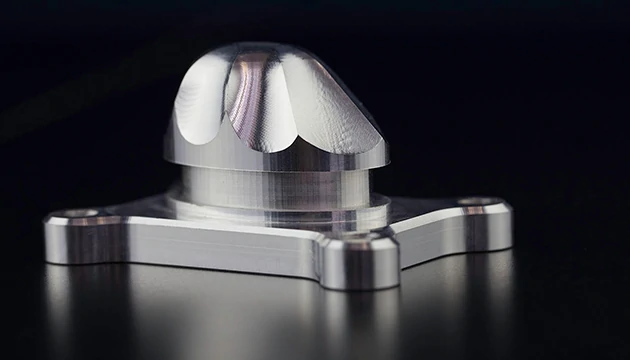
CNC machining is appropriate when prototypes require precision, engineering materials, or production-like mechanical properties.
It can be used for:
Aluminum prototypes
Stainless steel components
Brass parts
Engineering plastic prototypes
Precision mechanical components
CNC machining can support both prototype development and later low-volume production.
Vacuum casting uses silicone molds and suitable casting resins to reproduce multiple prototype parts.
It is useful when customers need:
Multiple plastic prototypes
Production-like appearance
Complex shapes
Different colors or finishes
Small-batch parts
Vacuum casting can be an effective bridge between 3D printing and injection molding.
Sheet metal manufacturing is commonly used for:
Enclosures
Brackets
Panels
Frames
Covers
Equipment components
Typical processes include laser cutting, bending, welding, drilling, and surface finishing.
Injection molding becomes more appropriate when the product design is sufficiently mature and production quantities justify tooling.
It can provide parts using production-grade thermoplastic materials and can support the transition from prototype validation to larger-scale production.
Die casting can be considered for metal parts when the geometry, material requirements, and production volume justify tooling.
It is commonly used for production-oriented aluminum or zinc components.
Choosing a supplier requires evaluating more than the quotation.
First determine whether the manufacturer can provide the processes your project requires.
A supplier offering multiple technologies can be advantageous when the product may move from 3D printing to CNC machining, vacuum casting, injection molding, or another process during development.
A good prototype manufacturer should be able to review your design before manufacturing.
DFM analysis may identify:
Difficult geometries
Thin walls
Deep cavities
Tight tolerances
Tooling limitations
Material issues
Potential assembly problems
This feedback can help reduce manufacturing risk before production starts.
Ask how the manufacturer verifies the finished parts.
Depending on the project, quality control may include:
Dimensional inspection
Visual inspection
Material verification
Surface inspection
Functional testing
Inspection reports
For high-precision or regulated applications, customers may also require specific quality documentation and certifications.
The manufacturer should understand why a particular material is being used.
For example, a material selected for an appearance prototype may not be suitable for a high-temperature functional test.
Material selection should consider:
Strength
Hardness
Flexibility
Temperature resistance
Chemical resistance
Weight
Surface requirements
Production process
If prototypes are being presented to customers, investors, designers, or internal product teams, surface finish can be important.
Common options include:
Anodizing
Painting
Powder coating
Polishing
Sandblasting
Brushing
Plating
Texturing
For international projects, communication is part of manufacturing quality.
The supplier should be able to clearly confirm:
Technical requirements
Material
Quantity
Tolerances
Lead time
Inspection requirements
Packaging
Shipping arrangements
Clear communication can prevent misunderstandings before production begins.
To receive a useful quotation, provide as much technical information as possible.
A typical RFQ package may include:
Common formats include STEP, STP, IGES, STL, or native CAD formats depending on the manufacturer.
2D drawings are especially important when the project includes:
Critical dimensions
GD&T
Threads
Surface requirements
Tight tolerances
Inspection points
Specify the desired material when it is already known.
If you are unsure, ask the manufacturer to recommend suitable options based on the prototype's intended use.
The required quantity affects process selection and cost.
For example, one prototype and several dozen prototypes may require different manufacturing approaches.
Specify whether the part requires machining marks, anodizing, painting, polishing, plating, texture, or another finish.
Include inspection standards, material certificates, dimensional reports, or other documentation when required.
DFM, or Design for Manufacturing, evaluates whether a product can be manufactured efficiently and reliably.
For prototype projects, DFM can help identify manufacturing risks before parts are produced.
For example, an engineer may recommend:
Adjusting wall thickness
Relaxing unnecessary tolerances
Changing part orientation
Modifying internal features
Changing material
Splitting a complex component
Modifying a design for injection molding
The goal is not to change the product unnecessarily.
Instead, DFM aims to maintain the intended function while making the part more practical to manufacture.
One of the most useful advantages of working with a multi-process manufacturer is the ability to change manufacturing technologies as the product matures.
A typical development path may look like:
3D Printing → Functional Testing → CNC Machining / Vacuum Casting → Design Validation → Injection Molding / Die Casting → Production
For example, a plastic product may begin with 3D-printed prototypes for form and fit testing.
After the design is validated, vacuum casting can produce multiple parts for customer or engineering evaluation.
Once the design is stable and production volume increases, injection molding may become more economical.
The same principle can apply to metal products:
3D Printing or CNC Prototype → Functional Validation → Design Optimization → Die Casting / CNC Production → Mass Production
The exact process depends on the product.
Yes, provided the manufacturer can meet the project's technical, quality, communication, and logistics requirements.
International customers should evaluate:
Manufacturing capability
Quality control
Engineering support
Certifications
Material capability
Communication
Intellectual property protection
Packaging
Export experience
Shipping arrangements
For regulated industries such as medical devices or aerospace, customers should also verify whether the supplier has the quality systems, documentation, materials, and production controls required for the specific project.
Intellectual property protection should be considered before sharing confidential product information.
Practical measures can include:
Using an NDA when appropriate
Sharing only necessary technical information
Controlling access to CAD files
Clearly identifying confidential information
Choosing a manufacturer with appropriate project-management procedures
Confirming ownership of designs and tooling in the commercial agreement
The specific legal protections available depend on the countries involved and the circumstances of the project.
China prototype manufacturers support product development across many industries.
Prototype components can include:
Interior parts
Exterior components
Brackets
Housings
Mechanical components
Prototype manufacturing can support lightweight structures, brackets, housings, and other precision components.
Prototypes can be used for:
Housing development
Ergonomic evaluation
Assembly testing
Functional validation
Medical projects may require specific materials, quality systems, documentation, and regulatory considerations.
Common prototype applications include:
Product housings
Structural components
Buttons
Internal brackets
Heat-management components
Prototype manufacturers can produce:
Mechanical components
Equipment housings
Fixtures
Brackets
Custom assemblies
A China prototypes manufacturer is a manufacturing company in China that produces custom product prototypes for domestic or international customers using processes such as 3D printing, CNC machining, vacuum casting, sheet metal fabrication, injection molding, and die casting.
Companies may choose China-based prototype manufacturers because of the country's broad manufacturing ecosystem and availability of multiple production processes. However, supplier capability, quality, communication, and project requirements should be evaluated individually.
Prototype cost depends on the manufacturing process, material, part complexity, tolerance, quantity, finishing, tooling, inspection, and shipping requirements. There is no universal price for prototype manufacturing in China.
Lead time depends on the manufacturing process, material, geometry, quantity, finishing, inspection, and tooling requirements. Simple prototypes may have short production cycles, while complex projects require more time.
A typical quotation package includes 3D CAD files, 2D drawings when applicable, material requirements, quantity, tolerances, surface finish requirements, and quality specifications.
Yes. Many prototype manufacturers provide engineering and DFM reviews. The depth of support varies between suppliers, so buyers should confirm what is included before placing an order.
Some manufacturers can support both prototyping and production. The appropriate transition may involve CNC machining, injection molding, die casting, sheet metal fabrication, or another production process depending on the product and volume.
Yes. Processes such as 3D printing, CNC machining, vacuum casting, and sheet metal fabrication can be used for prototypes and small-batch production. The most suitable process depends on quantity, material, geometry, and functional requirements.
SERVICES