



- info@prototypeshlh.com
- +86-133-9285-9203
- Room 2003, 20th Floor, Xingji Building, Shangde Road, Shajing Street, Bao'an District, Shenzhen
SERVICES

CNC Machining Service
Tight tolerances and finishing capabilities, as fast as 2 days.

Vacuum Casting Service
Production quality parts without the tooling investment.

Sheet Metal Fabrication
Experience the versatility 6 cost efficiency withflexible application options.

Die Casting Service
Create high quality custom mechanicals withprecision and accuracy.

Injection Molding Service
Production-grade steel tooling, as fast as weeks.

Carbon Fiber Manufacturing
Composite materials, such as carbon fiber reinforced plastics are highly versatile and efficient materials.
Popular Services

Injection Molding Service
A faster, easier way to order high-quality injection molded parts that accelerates iteration, testing, and scaled production. Upload your designs for DFM feedback and pricing in 24 hours.

3D Printing Service
Our 3D printing solutions cater to personalised needs with a diverse range of materials and colour options, including SLA, SLS, FDM, Projet, DMLS, and MJF printing services.

Surface Finishing
The easiest way to source your custom parts, with 15+ surface finishing options.

Design Guide
In-depth design guides full of best practices for all of HLH's manufacturing processes.

Case Studies
Success stories from innovativecompanies using HLH.

Blog
lndustry trends, company news andproduct updates.
Featured Posts
3D Printing vs. CNC Machining: Which is Better for Prototyping?
View more →
The Advantages of Projection 3D Printing for Mass Production
View more →
How to Choose Between Aluminum Alloy Casting and CNC Machining
View more →
What is Vacuum Injection Molding? What Type Suitable for Production?
View more →

About Us
Learn about our company, leadership, and mission totransform manufacturing.

Privacy Policy
Applies to all personal information collected through and/or processed in connection.

Contact Us
Our team is on stand by, waiting to assist you.

Videos
A large collection of educational videos and tutorials.

Aerospace & UAV
HLH is your 3D manufacturing partner from prototype to large scale production.

Consumer Products
New Product Introduction Solutions for Consumer Products.

Automotive
New Product Introduction Solutions for Automotive.

Industrial Machinery
The main purpose of industrial prototyping is to take the product from drawings into the real world.

Robotics & Automation
Need some assistance bringing your robotic device or parts from the sketch-board to reality?

Medical Devices
The medical industry needs high quality, dependable and safe parts and products.

Communications
We understand the demands and ever changing landscape of the communications industry.

Product Development
Industrial design and engineering consultancies are some of the most innovate and creative enterprises on the planet.

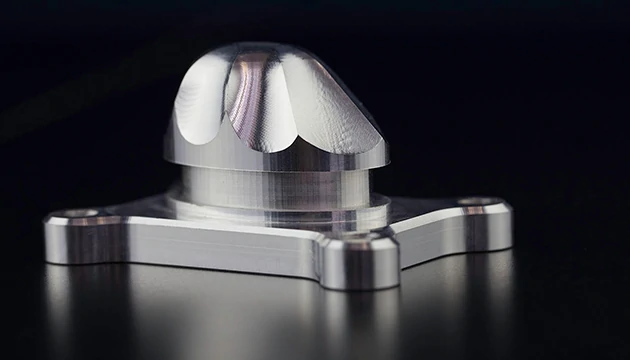
When your engineering project demands tight tolerances, structural integrity, and exact material properties, Precision CNC Machining remains the gold standard of subtractive manufacturing. From aerospace housings and medical equipment to automotive brackets and consumer electronics, CNC machining delivers unmatched repeatability across metals and engineering plastics.
This guide explores modern CNC machining capabilities, material choices, axis configurations, and design optimization tips to help you move seamlessly from prototype validation to low-volume production.
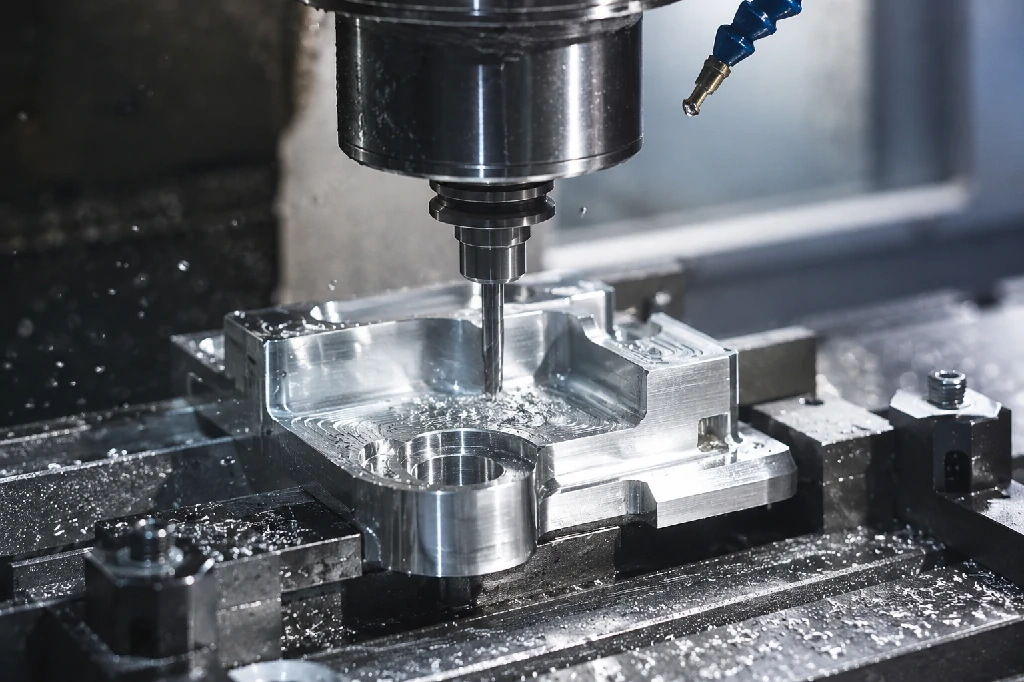
CNC (Computer Numerical Control) Machining is a subtractive manufacturing process where automated cutting tools remove material from a solid block (stock or billet) based on a 3D CAD model.
Unlike 3D printing, which builds parts layer-by-layer, or injection molding, which requires upfront tooling investment, CNC machining cuts parts directly out of production-grade raw stock. This guarantees superior physical properties, isotropy, and dimensional accuracy right from the first unit.
Choosing the correct machine configuration directly impacts part accuracy, surface finish, and unit cost.
Machine Type | Axis Movement | Best Suited For | Key Advantages |
3-Axis Milling | X, Y, Z axes | Flat geometries, simple brackets, basic enclosures | Cost-effective, fast setup, ideal for straightforward parts |
4-Axis Milling | X, Y, Z + A-axis rotation | Cylinder cuts, off-center holes, continuous helix shapes | Eliminates multiple setups, improves indexing accuracy |
5-Axis Milling | X, Y, Z + A/B simultaneous rotation | Complex aerospace impellers, medical implants, deep cavities | Machined in a single setup, superior surface finish, extreme precision |
CNC Turning / Lathe | Rotary spindle + X, Z tool movement | Cylindrical shafts, bushings, threaded fittings, bushings | Fast material removal for rotational symmetry |
Selecting the right alloy or polymer is crucial to meeting thermal, mechanical, and regulatory specifications.
Aluminum 6061-T6: Outstanding machinability, excellent strength-to-weight ratio, ideal for structural prototypes and housings.
Aluminum 7075-T6: High-strength aerospace grade alloy with superior fatigue resistance.
Stainless Steel (304 / 316 / 17-4PH): Corrosion-resistant, high tensile strength, perfect for medical and marine applications.
Titanium (Grade 5 / Ti-6Al-4V): Biocompatible, extreme strength, low thermal conductivity for critical components.
Brass & Copper: High electrical/thermal conductivity, ideal for connectors, heat sinks, and decorative hardware.
POM (Delrin / Acetal): Exceptional dimensional stability, low friction, tight tolerance gear parts.
PEEK: High-temperature resistance, chemical resistance, USP Class VI certified for medical and aerospace environments.
Polycarbonate (PC) & ABS: High impact resistance, great for clear lenses, electronics covers, and structural casings.
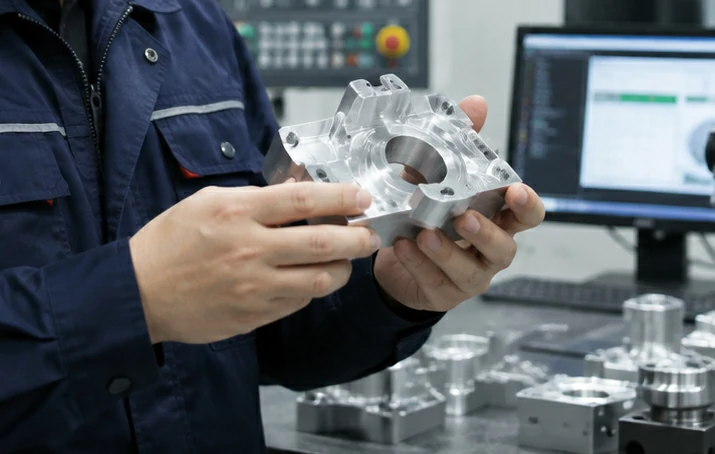
Optimizing your 3D CAD file for CNC milling reduces machine time and saves production costs:
Internal Corner Radii: Avoid sharp 90° internal vertical corners. Add a radius equal to or slightly larger than standard end mill dimensions (e.g., $R \ge 1.5\text{ mm}$).
Cavity Depth Ratios: Limit internal pocket depth to no more than 4 times the cutter diameter ($4\times D$) to prevent tool deflection and chatter.
Wall Thickness: Maintain a minimum wall thickness of $0.8\text{ mm}$ for metals and $1.5\text{ mm}$ for plastics to prevent deformation during cutting.
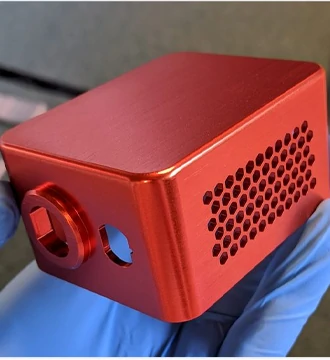
Post-processing enhances aesthetic appearance, corrosion resistance, and wear characteristics:
As-Machined: Standard visible tool marks ($Ra\ 1.6 - 3.2\ \mu\text{m}$).
Anodizing (Type II / Type III Hardcoat): Corrosion protection and custom color finishes for aluminum.
Bead Blasting: Creates a clean, uniform satin or matte surface finish.
Powder Coating / Painting: Durable cosmetic coating for external product enclosures.
Electropolishing & Passivation: Maximum corrosion resistance for stainless steel surgical and food-grade components.
Whether you need a single functional prototype in 24 hours or a low-volume batch of 1,000+ precision components, having a multi-process manufacturing facility ensures seamless execution.
At HLH Prototypes, our CNC machining center combines advanced 3-axis, 4-axis, and simultaneous 5-axis milling with precision CNC turning and EDM capabilities.
Speed & Accuracy: Tolerances down to $\pm0.01\text{ mm}$ with rapid delivery options.
End-to-End Solutions: Integrated with our 3D Printing, Vacuum Casting, Sheet Metal Fabrication, Injection Molding, and Carbon Fiber Manufacturing capabilities.
Guaranteed Quality: ISO 9001 and ISO 13485 certified, equipped with CMM inspection and material certification reports.
Have a CNC CAD drawing ready for review? Upload your files to HLH Prototypes today for an instant quote and professional DFM analysis.
SERVICES