



- info@prototypeshlh.com
- +86-133-9285-9203
- Room 2003, 20th Floor, Xingji Building, Shangde Road, Shajing Street, Bao'an District, Shenzhen
SERVICES

CNC Machining Service
Tight tolerances and finishing capabilities, as fast as 2 days.

Vacuum Casting Service
Production quality parts without the tooling investment.

Sheet Metal Fabrication
Experience the versatility 6 cost efficiency withflexible application options.

Die Casting Service
Create high quality custom mechanicals withprecision and accuracy.

Injection Molding Service
Production-grade steel tooling, as fast as weeks.

Carbon Fiber Manufacturing
Composite materials, such as carbon fiber reinforced plastics are highly versatile and efficient materials.
Popular Services

Injection Molding Service
A faster, easier way to order high-quality injection molded parts that accelerates iteration, testing, and scaled production. Upload your designs for DFM feedback and pricing in 24 hours.

3D Printing Service
Our 3D printing solutions cater to personalised needs with a diverse range of materials and colour options, including SLA, SLS, FDM, Projet, DMLS, and MJF printing services.

Surface Finishing
The easiest way to source your custom parts, with 15+ surface finishing options.

Design Guide
In-depth design guides full of best practices for all of HLH's manufacturing processes.

Case Studies
Success stories from innovativecompanies using HLH.

Blog
lndustry trends, company news andproduct updates.
Featured Posts
3D Printing vs. CNC Machining: Which is Better for Prototyping?
View more →
The Advantages of Projection 3D Printing for Mass Production
View more →
How to Choose Between Aluminum Alloy Casting and CNC Machining
View more →
What is Vacuum Injection Molding? What Type Suitable for Production?
View more →

About Us
Learn about our company, leadership, and mission totransform manufacturing.

Privacy Policy
Applies to all personal information collected through and/or processed in connection.

Contact Us
Our team is on stand by, waiting to assist you.

Videos
A large collection of educational videos and tutorials.

Aerospace & UAV
HLH is your 3D manufacturing partner from prototype to large scale production.

Consumer Products
New Product Introduction Solutions for Consumer Products.

Automotive
New Product Introduction Solutions for Automotive.

Industrial Machinery
The main purpose of industrial prototyping is to take the product from drawings into the real world.

Robotics & Automation
Need some assistance bringing your robotic device or parts from the sketch-board to reality?

Medical Devices
The medical industry needs high quality, dependable and safe parts and products.

Communications
We understand the demands and ever changing landscape of the communications industry.

Product Development
Industrial design and engineering consultancies are some of the most innovate and creative enterprises on the planet.

Finding the right manufacturer is one of the most important steps in turning a product idea into reality. Whether you are developing a prototype, launching a startup, or preparing for mass production, your manufacturing partner can directly affect product quality, cost, lead time, and long-term business success.
Today, many companies rely on on-demand manufacturing and rapid prototyping services to accelerate product development and reduce risks before full-scale production.
In this guide, we’ll explain how to find a manufacturer for your product, what factors to consider, and how to choose the right manufacturing partner for your project.
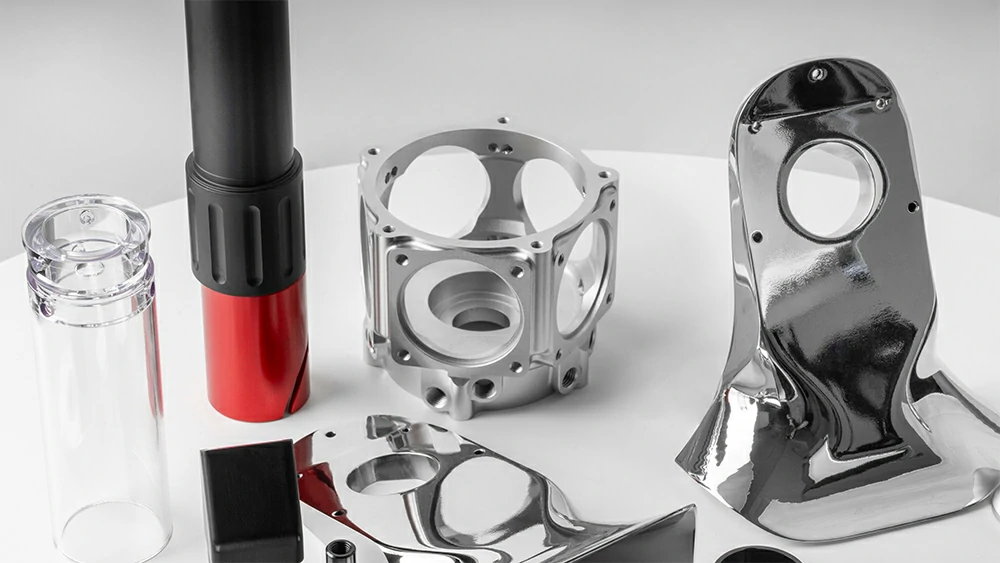
Before searching for a manufacturer, you should clearly define your product requirements.
Key questions to ask include:
The more detailed your product information is, the easier it will be to identify the right manufacturer.
For example, if you need precision metal parts, a company specializing in CNC machining services may be the best choice. If you need plastic housings for small-batch production, vacuum casting or injection molding services may be more suitable.
Not all manufacturers offer the same services. Some companies only focus on mass production, while others specialize in rapid prototyping and low-volume manufacturing.
A reliable manufacturing partner should ideally provide multiple processes under one roof, including:
Companies like HLH Prototypes provide integrated rapid manufacturing services that support both prototype development and production manufacturing.
Working with a one-stop manufacturer can simplify communication, reduce sourcing complexity, and improve production efficiency.
Before investing in full production, it is important to test your design with prototypes.
Rapid prototyping helps companies:
An experienced manufacturer should provide fast prototyping solutions such as:
For example, HLH rapid prototyping services support quick turnaround and multiple manufacturing methods for different product development stages.
This flexibility allows businesses to move from concept to production faster.
Industry experience is another important factor when choosing a manufacturer.
Look for manufacturers that have experience in industries such as:
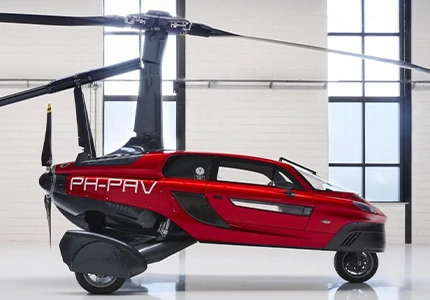
Manufacturers with cross-industry experience are often better at solving engineering and production challenges.
A company with years of manufacturing expertise can also provide valuable DFM (Design for Manufacturing) feedback to optimize your product design before production begins.
The right manufacturer should offer a wide range of materials and finishing capabilities.
Common manufacturing materials include:
You should also evaluate available surface finishes such as:
Manufacturers like HLH Prototypes offer extensive material and finishing options to support functional and cosmetic prototype requirements.
Different manufacturers specialize in different production volumes.
You may need:
An ideal manufacturing partner should support flexible production quantities without excessive tooling costs or long lead times.
This is especially important for startups and hardware companies that need to validate products before scaling production.
Quality control is essential in manufacturing.
Before selecting a supplier, check whether they have:
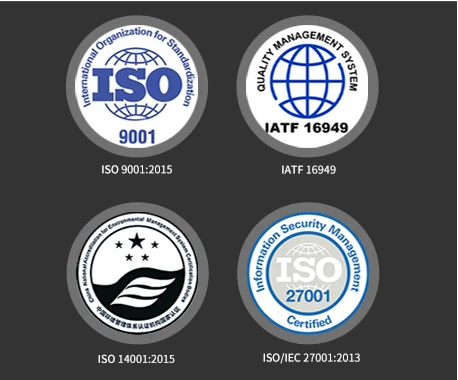
Reliable manufacturers usually have dedicated quality control teams and inspection procedures to ensure part accuracy and consistency.
This becomes even more important for precision industries such as aerospace and medical devices.
Strong communication can significantly improve project success.
A good manufacturer should provide:
Many product development delays happen because of poor communication between customers and suppliers.
Working with a manufacturer that offers dedicated project management can help reduce errors and improve efficiency throughout the development process.
Cost is important, but the cheapest manufacturer is not always the best option.
Instead, evaluate the balance between:
A slightly higher manufacturing cost may save significant time and prevent expensive production problems later.
Many modern on-demand manufacturing companies provide fast quotations and short lead times, helping businesses accelerate product launches.
Traditional manufacturing often requires:
On-demand manufacturing solves these challenges by offering:
This approach is especially useful for startups, hardware developers, and companies launching new products.
Manufacturers like HLH Prototypes combine rapid prototyping and low-volume manufacturing services to help companies shorten product development cycles and bring products to market faster.
Before making a final decision, ask potential manufacturers questions such as:
These questions can help you evaluate whether the manufacturer is the right fit for your product.
Finding the right manufacturer for your product is about more than just production capacity. The ideal partner should provide:
Whether you need CNC machining, injection molding, vacuum casting, or low-volume production, choosing an experienced on-demand manufacturing company can significantly improve your product development process.
By carefully evaluating capabilities, experience, quality systems, and communication, you can confidently select a manufacturing partner that helps turn your ideas into successful products.
Contact us today for a free quote on your project.
Emali: info@prototypeshlh.com
Phone: +86-133-9285-9203
SERVICES