


- info@prototypeshlh.com
- +86-133-9285-9203
- Room 2003, 20th Floor, Xingji Building, Shangde Road, Shajing Street, Bao'an District, Shenzhen
SERVICES

CNC Machining Service
Tight tolerances and finishing capabilities, as fast as 2 days.

Vacuum Casting Service
Production quality parts without the tooling investment.

Sheet Metal Fabrication
Experience the versatility 6 cost efficiency withflexible application options.

Die Casting Service
Create high quality custom mechanicals withprecision and accuracy.

Injection Molding Service
Production-grade steel tooling, as fast as weeks.

Carbon Fiber Manufacturing
Composite materials, such as carbon fiber reinforced plastics are highly versatile and efficient materials.
Popular Services

Injection Molding Service
A faster, easier way to order high-quality injection molded parts that accelerates iteration, testing, and scaled production. Upload your designs for DFM feedback and pricing in 24 hours.

3D Printing Service
Our 3D printing solutions cater to personalised needs with a diverse range of materials and colour options, including SLA, SLS, FDM, Projet, DMLS, and MJF printing services.

Surface Finishing
The easiest way to source your custom parts, with 15+ surface finishing options.

Design Guide
In-depth design guides full of best practices for all of HLH's manufacturing processes.

Case Studies
Success stories from innovativecompanies using HLH.

Blog
lndustry trends, company news andproduct updates.
Featured Posts
3D Printing vs. CNC Machining: Which is Better for Prototyping?
View more →
The Advantages of Projection 3D Printing for Mass Production
View more →
How to Choose Between Aluminum Alloy Casting and CNC Machining
View more →
What is Vacuum Injection Molding? What Type Suitable for Production?
View more →

About Us
Learn about our company, leadership, and mission totransform manufacturing.

Privacy Policy
Applies to all personal information collected through and/or processed in connection.

Contact Us
Our team is on stand by, waiting to assist you.

Videos
A large collection of educational videos and tutorials.

Aerospace & UAV
HLH is your 3D manufacturing partner from prototype to large scale production.

Consumer Products
New Product Introduction Solutions for Consumer Products.

Automotive
New Product Introduction Solutions for Automotive.

Industrial Machinery
The main purpose of industrial prototyping is to take the product from drawings into the real world.

Robotics & Automation
Need some assistance bringing your robotic device or parts from the sketch-board to reality?

Medical Devices
The medical industry needs high quality, dependable and safe parts and products.

Communications
We understand the demands and ever changing landscape of the communications industry.

Product Development
Industrial design and engineering consultancies are some of the most innovate and creative enterprises on the planet.

When scaling a hardware product from early-stage functional prototypes to market-ready consumer goods or industrial components, choosing the right manufacturing strategy is paramount. While 3D printing and vacuum casting excel at low volumes, Plastic Injection Molding remains the undisputed standard for mass-producing high-precision, structural, and aesthetically flawless plastic components.
Whether you need a bridge production run of 500 units or a full-scale mass production order of 100,000+ parts, understanding why injection molding is the smartest choice will help you optimize design, reduce unit costs, and accelerate your time-to-market.
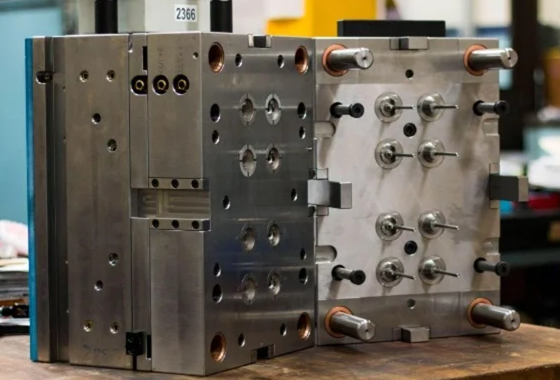
Plastic Injection Molding works by heating thermoplastic resin granules into a viscous liquid, which is then injected under high pressure into a precision-machined steel or aluminum mold cavity. Once cooled, the material solidifies into a finished plastic part that requires minimal post-processing.
Granule Feeding
⬇
Thermal Melting
⬇
High-Pressure Injection
⬇
Cooling & Ejection
Ultra-Fast Cycle Times: Parts are produced in seconds—ranging from 10 to 60 seconds depending on wall thickness—enabling high daily output.
Lowest Per-Unit Cost at Scale: While upfront tooling is required, the per-part production cost drops significantly as volume increases, outperforming subtractive or additive methods.
Flawless Repeatability & Isotropy: Parts possess uniform isotropic material strength and identical dimensional accuracy across millions of cycles.
Minimal Scrap & High Material Reuse: Excess plastic in runners and sprues can often be reground and recycled back into the production stream.

Modern rapid tooling advancements have eliminated the old myth that injection molding is only viable for mega-volume production.
Metric / Parameter | Rapid Injection Molding (Bridge Tooling) | Production Injection Molding (Mass Scale) |
Target Volume | 100 to 10,000+ parts | 10,000 to 1,000,000+ parts |
Mold Material | Aluminum (7075) or Soft Steel (P20) | Hardened Steel (H13 / S136) |
Tooling Lead Time | Fast (1 to 3 weeks) | 4 to 8 weeks |
Upfront Tooling Cost | Low to Moderate | High (Multi-cavity automated) |
Ideal Application | Market pilot runs, functional testing, regulatory samples | Full commercial mass production |
Plastic injection molding offers access to thousands of commercial polymers, elastomeric resins, and custom blends tailored for specific thermal, mechanical, or aesthetic performance:
ABS & Polycarbonate (PC): Superior impact resistance and dimensional stability for consumer electronics enclosures and automotive trims.
Polypropylene (PP) & Polyethylene (PE): Flexible, chemically inert, and cost-effective for fluid tanks, medical containers, and caps.
Nylon (PA6 / PA66 / Glass-Filled): High tensile strength, wear resistance, and thermal tolerance for gears, brackets, and structural housings.
Liquid Silicone Rubber (LSR) & TPE/TPU: Overmolded ergonomic grips, flexible gaskets, medical masks, and seals.
High-Performance Resins (PEEK / PPS): Exceptional heat and chemical resistance for aerospace, medical, and automotive under-hood applications.
Applying Design for Manufacturability (DFM) rules early prevents mold modifications, eliminates defects, and minimizes cycle times:
Uniform Wall Thickness: Aim for consistent wall thickness throughout the part to eliminate sink marks, warpage, and void creation.
Incorporate Draft Angles: Apply 1° to 2° draft to vertical surfaces to allow parts to eject smoothly without drag marks or surface scuffing.
Radiused Internal Corners: Replace sharp internal 90° turns with generous radii (R ≥ 0.5 × t) to reduce stress concentration and improve melt flow.
Optimize Gate & Ejector Pin Locations: Position gates in hidden functional areas to maintain pristine cosmetic surfaces.
Transitioning your plastic parts into injection molding requires a manufacturing partner capable of managing the full journey—from early prototyping to full-scale production.
At HLH Prototypes, our rapid tooling and injection molding facility combines state-of-the-art mold machining with strict quality control:
Full Prototyping Ecosystem: Seamlessly transition from SLA/SLS 3D Printing, 5-Axis CNC Machining, and Polyurethane Vacuum Casting to Rapid Injection Molding and Die Casting.
Expert DFM & Mold Flow Analysis: Receive free, detailed DFM feedback and digital mold flow simulations on every CAD file before cutting metal.
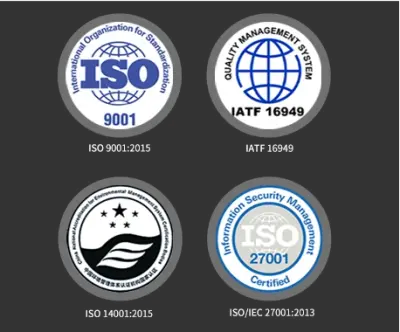
ISO 9001 & ISO 13485 Certified: Full material lot traceability, CMM dimensional inspection reports, and first article inspections (FAI).
Ready to produce efficient, high-precision plastic parts? Upload your CAD models to HLH Prototypes today for an instant quote and expert DFM review.
SERVICES