




- info@prototypeshlh.com
- +86-133-9285-9203
- Room 2003, 20th Floor, Xingji Building, Shangde Road, Shajing Street, Bao'an District, Shenzhen
SERVICES

CNC Machining Service
Tight tolerances and finishing capabilities, as fast as 2 days.

Vacuum Casting Service
Production quality parts without the tooling investment.

Sheet Metal Fabrication
Experience the versatility 6 cost efficiency withflexible application options.

Die Casting Service
Create high quality custom mechanicals withprecision and accuracy.

Injection Molding Service
Production-grade steel tooling, as fast as weeks.

Carbon Fiber Manufacturing
Composite materials, such as carbon fiber reinforced plastics are highly versatile and efficient materials.
Popular Services

Injection Molding Service
A faster, easier way to order high-quality injection molded parts that accelerates iteration, testing, and scaled production. Upload your designs for DFM feedback and pricing in 24 hours.

3D Printing Service
Our 3D printing solutions cater to personalised needs with a diverse range of materials and colour options, including SLA, SLS, FDM, Projet, DMLS, and MJF printing services.

Surface Finishing
The easiest way to source your custom parts, with 15+ surface finishing options.

Design Guide
In-depth design guides full of best practices for all of HLH's manufacturing processes.

Case Studies
Success stories from innovativecompanies using HLH.

Blog
lndustry trends, company news andproduct updates.
Featured Posts
3D Printing vs. CNC Machining: Which is Better for Prototyping?
View more →
The Advantages of Projection 3D Printing for Mass Production
View more →
How to Choose Between Aluminum Alloy Casting and CNC Machining
View more →
What is Vacuum Injection Molding? What Type Suitable for Production?
View more →

About Us
Learn about our company, leadership, and mission totransform manufacturing.

Privacy Policy
Applies to all personal information collected through and/or processed in connection.

Contact Us
Our team is on stand by, waiting to assist you.

Videos
A large collection of educational videos and tutorials.

Aerospace & UAV
HLH is your 3D manufacturing partner from prototype to large scale production.

Consumer Products
New Product Introduction Solutions for Consumer Products.

Automotive
New Product Introduction Solutions for Automotive.

Industrial Machinery
The main purpose of industrial prototyping is to take the product from drawings into the real world.

Robotics & Automation
Need some assistance bringing your robotic device or parts from the sketch-board to reality?

Medical Devices
The medical industry needs high quality, dependable and safe parts and products.

Communications
We understand the demands and ever changing landscape of the communications industry.

Product Development
Industrial design and engineering consultancies are some of the most innovate and creative enterprises on the planet.

Choosing the right material is one of the most important decisions when developing a prototype. The material you select affects the part’s strength, durability, cost, appearance, and machinability.
CNC machining is widely used for rapid prototyping because it can process a wide variety of materials with high precision and excellent surface finishes. However, not all materials perform the same during machining or testing.
In this guide, we’ll explore the best materials for CNC machining prototypes, their advantages, and when to choose each one.
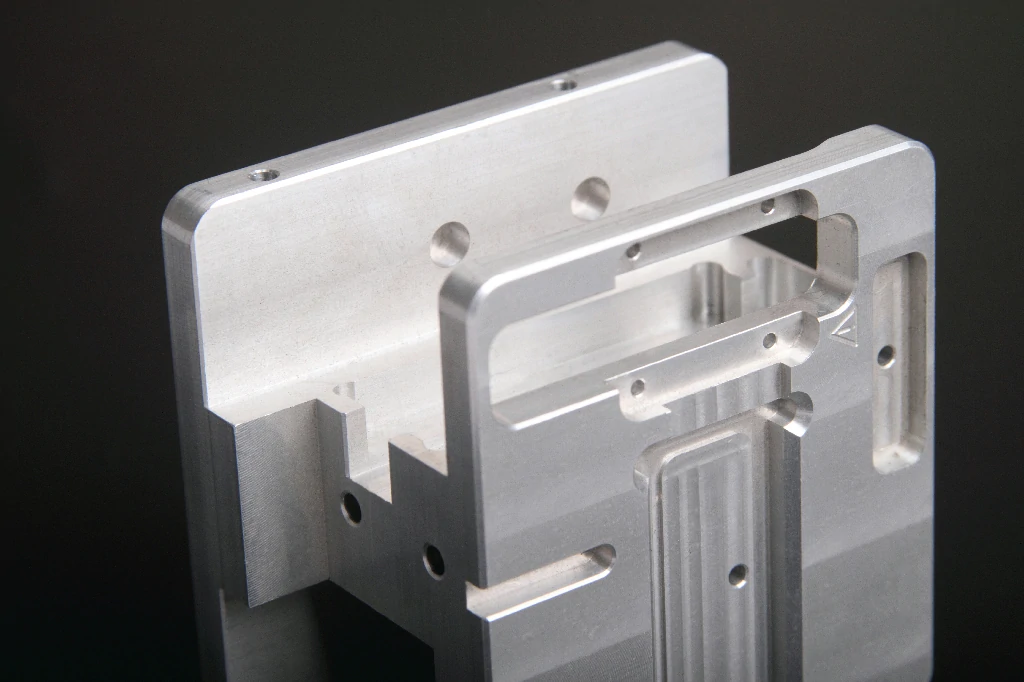
CNC machining for prototyping offers the unique advantage of using engineering-grade materials that closely mirror production parts . Unlike additive manufacturing processes that may use specialized resins with different properties, CNC machined prototypes can be created from the exact same materials intended for final production . This allows for meaningful functional testing, including mechanical strength evaluation, thermal performance assessment, and environmental resistance validation .
The material choice directly impacts several critical factors:
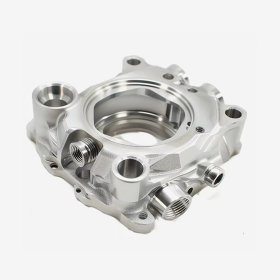
Aluminum is the most popular metal for CNC prototyping due to its excellent balance of machinability, strength, weight, and cost .
Aluminum 6061
Aluminum 7075
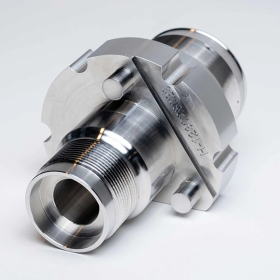
Stainless steel offers superior strength, corrosion resistance, and a premium feel for prototypes that must endure harsh environments or represent medical/aerospace products .
Stainless Steel 304
Stainless Steel 316
Stainless Steel 17-4 PH
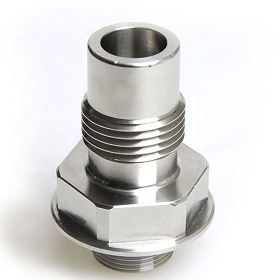
Titanium offers an exceptional strength-to-weight ratio combined with outstanding corrosion resistance, but at significantly higher cost and machining difficulty .
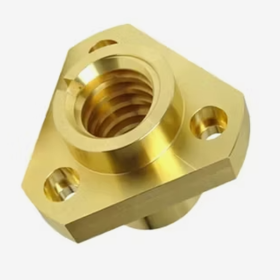
These softer metals offer unique electrical and thermal properties with excellent machinability .
Brass (C360 Free-Machining)
Copper (C110, C101)
Plastics offer lightweight, corrosion resistance, electrical insulation, and often lower cost for prototypes, especially in consumer and medical applications .
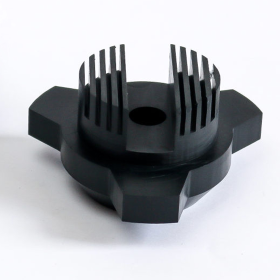
ABS is the go-to plastic for low-cost, general-purpose prototypes when mechanical demands are moderate .
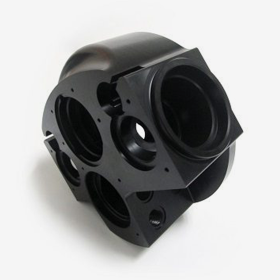
Acetal plastics are engineering materials prized for precision components requiring tight tolerances, low friction, and dimensional stability .
Acetal Homopolymer (Delrin®)
Acetal Copolymer (POM-C)
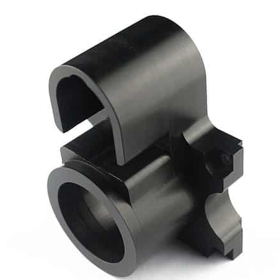
Nylon offers excellent wear resistance, toughness, and self-lubricating properties for moving parts .
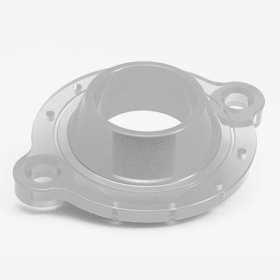
Polycarbonate combines exceptional impact resistance with transparency, making it unique among engineering plastics .
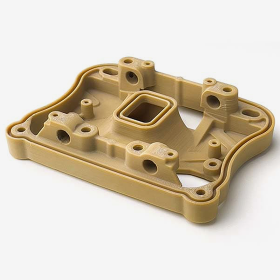
PEEK is a high-performance thermoplastic that replaces metal in demanding applications requiring thermal stability, chemical resistance, and mechanical strength .
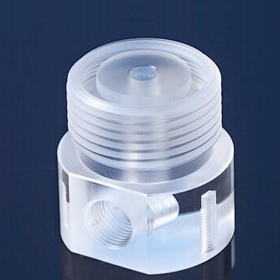
Acrylic offers excellent optical clarity and weatherability for visual prototypes and light transmission applications .
| Application Scenario | Recommended Material | Why |
|---|---|---|
| Low-cost form/fit prototypes | ABS, Aluminum 6061 | Affordable, easy to machine, readily available |
| High strength-to-weight ratio | Aluminum 7075, Titanium | Excellent performance-to-weight balance |
| Moving parts / wear resistance | Acetal (Delrin), Nylon, PEEK | Low friction, self-lubricating properties |
| Corrosion resistance | Stainless Steel 316, Titanium, PEEK | Excellent resistance to harsh environments |
| High-temperature applications | PEEK, PEI (Ultem), Stainless Steel | Maintain properties at elevated temperatures |
| Transparent prototypes | Acrylic, Polycarbonate | Optical clarity options available |
| Electrical conductivity | Copper, Brass | Excellent conductivity for electrical components |
| Electrical insulation | PTFE, Nylon, Acetal | High dielectric strength |
| FDA/food contact | Acetal Copolymer, PEEK, Stainless Steel 316 | Certified for food/pharmaceutical contact |
| Material | Tensile Strength (psi) | Impact Strength | Max Service Temp (°C) | Key Advantages |
|---|---|---|---|---|
| ABS | 6,000 | Excellent | 94 | Low cost, impact resistance |
| Acetal Copolymer | 8,800 | Moderate | 110 | Dimensional stability, low friction |
| Acetal Homopolymer | 11,100 | Good | 120 | Highest strength among acetals |
| Nylon 6/6 | 12,000 | Good | 90-235* | Wear resistance, toughness |
| Nylon 30% GF | 13,000-19,000 | Good | 150 | High stiffness, strength |
| Polycarbonate | 8,000-9,500 | Excellent | 135 | Impact strength, transparency |
| PEEK | 14,000 | Good | 240 | High-temperature performance |
| Acrylic | 8,000-10,000 | Poor | 105 | Optical clarity, UV stability |
*Varies by grade and conditioning
| Material | Tensile Strength (psi) | Density (g/cm³) | Relative Cost | Key Advantages |
|---|---|---|---|---|
| Aluminum 6061 | 41,000-45,000 | 2.70 | $ | Best all-around prototyping metal |
| Aluminum 7075 | 73,000-83,000 | 2.81 | $$ | High strength, aerospace applications |
| Stainless 304 | 75,000-85,000 | 8.00 | $$ | Corrosion resistance, versatile |
| Stainless 316 | 85,000-90,000 | 8.00 | $$ | Superior chemical resistance |
| Stainless 17-4 PH | 150,000-190,000* | 7.80 | $$$ | Maximum strength, hardness |
| Titanium (Ti-6Al-4V) | 130,000-145,000 | 4.43 | $$$$ | Strength-to-weight, biocompatible |
| Brass (C360) | 55,000-65,000 | 8.50 | $$ | Machinability, electrical conductivity |
| Copper (C101) | 32,000-35,000 | 8.94 | $$ | Thermal/electrical conductivity |
*After heat treatment
Also, you can explore suitable materials on our website. If you can’t find the material you need, please contact us for additional options and detailed specifications.
https://www.prototypeshlh.com/resources/materials/cnc-machining-materials
Before selecting a material, clarify what you need to learn from the prototype :
List and rank the essential properties your prototype must demonstrate :
Use the comparison tables above to identify candidate materials that meet your performance thresholds. Start with functional requirements first, then consider cost and availability .
A material's machinability directly impacts prototype cost and delivery :
Check material availability during design phase to prevent delays, especially for prototypes where fast iteration is critical .
Align material selection with specific testing objectives :
Select materials that are strong enough for the application—not the strongest available . Overengineering drives up both material costs and machining time. For non-structural or static parts, ABS or mild steel often provides sufficient strength at a fraction of the cost of premium alloys .
Tip 1: Consider Surface Finish Needs Early
Material choice directly impacts achievable surface finish and post-processing requirements . Brass and aluminum polish well to mirror finishes (0.2-0.4 µm Ra), while some plastics may retain machining marks. If cosmetic appearance matters, select materials known for good surface finish .
Tip 2: Account for Thermal Expansion
Plastics expand significantly more than metals with temperature changes . For prototypes that must maintain tight tolerances across temperature variations, consider materials with low coefficients of thermal expansion like Acetal Copolymer or glass-filled grades .
Tip 3: Prototype with Production Intent
Whenever possible, prototype with the material intended for production . This provides the most accurate validation of performance, manufacturability, and regulatory compliance. CNC machining uniquely enables this by working with engineering-grade materials .
Tip 4: Leverage DFM Feedback
Experienced CNC machining partners can provide Design for Manufacturing (DFM) feedback before cutting begins . This may reveal material-specific design considerations—such as minimum wall thicknesses, internal corner radii, or feature depths—that optimize the prototype for both performance and manufacturability .
Selecting the optimal material for CNC machined prototypes requires balancing functional requirements, cost, lead time, and testing objectives. Aluminum 6061 and ABS serve as excellent starting points for most general-purpose prototyping needs due to their favorable combination of properties, machinability, and availability . For specialized applications requiring high strength, wear resistance, thermal stability, or chemical resistance, engineering materials like Acetal/Delrin, Nylon, Polycarbonate, PEEK, Stainless Steel, and Titanium provide targeted solutions .
The key to successful prototyping is matching material properties to specific testing goals—not selecting the most expensive or strongest option available . By following a systematic selection process and leveraging the expertise of experienced machining partners, product development teams can create prototypes that accurately represent production intent while controlling costs and accelerating time-to-market .
SERVICES